
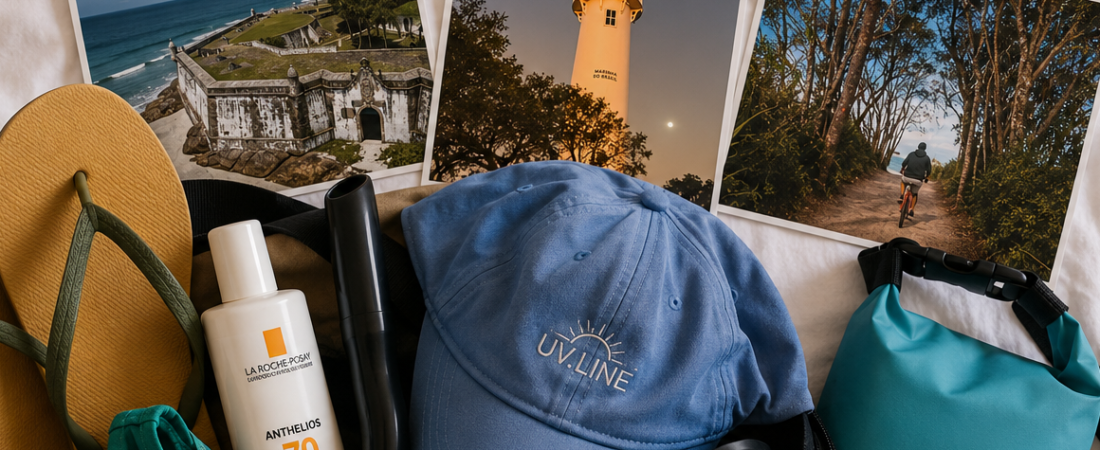
Fares shown in USD are approximate and based on an exchange rate of R$5.00 per USD, the average for May 2026. Exchange rates fluctuate, always check the current rate before traveling.
It’s time to pack for Ilha do Mel. And planning this part of the trip well makes all the difference in enjoying every minute on the island without worrying about what you left behind. The routine here is different from the city, and knowing these differences before you leave is what turns a good trip into an unforgettable one.
This guide covers everything about what to pack for Ilha do Mel, by season and trip length.
Understand the Destination
Ilha do Mel has a rhythm of its own, and understanding it before you pack transforms the way you’ll enjoy every day here. The island has no paved roads, the paths are mostly soft sand. There are no cars, and the only ways to get around are by bicycle or on foot. Good planning of what to bring means more time in comfort, and protection against any unnecessary inconvenience.
This doesn’t mean you need to arrive loaded up as if you were camping in the desert. It means it’s worth thinking before you put things in the bag.
The choice between a backpack and a rolling suitcase is a good example. Rolling suitcases work great in airports and hotels, but on sand the wheels sink and what was convenient becomes a burden. If you can choose, go with a backpack with adjustable straps. For day trips, a smaller daypack, a fanny pack, or a small dry bag works perfectly.
For those who prefer not to carry their main luggage, the island has a baggage transport service run by the local community. It is one of the few sources of income for residents, and the cost, around ~$12 USD (R$60), divides well as the group grows. For two people with heavy bags and a ten-minute walk to the pousada, it’s already worth it. And by hiring the baggage transport service, you are contributing to community-based tourism.
If you’re still planning how to get to the island, check out our complete guide.
By Season
Ilha do Mel has a climate transitioning between tropical and subtropical. Maximum temperatures reach 31°C in summer and minimums stay around 13°C in winter. On a few days of the year, usually at the peak of cold in July and August, temperatures can drop to around 5°C at dawn. These days are rare, but they happen, and anyone visiting during that period will be grateful for an extra layer.
Summer (December to March)
This is the season of heat, beach, and the highest number of visitors. Maximums range between 28°C and 31°C, with strong sun and quick, intense rain showers that arrive without warning.
The essentials for summer:
Light clothing, shorts, short-sleeved t-shirts, and swimwear are the uniform of the season. Bring more than you think you’ll need: between the sea, sweat, and passing showers, it’s easy to change clothes more than once a day.
Sunscreen is non-negotiable. The sun on the Paraná coast is strong, and on sand and in the water exposure is even greater. We’ll cover this in more detail in a dedicated section.
A light windbreaker takes up little space in your bag and handles that sudden weather shift or the cooler wind on a boat crossing, which happens even on the hottest summer days.
Winter (June to September)
Winter on the island is cold by coastal standards. Maximums stay around 20°C during the day, but nights can reach 13°C, and on a few days of the year dawn can surprise with temperatures close to 5°C. Wind makes it feel colder than the thermometer suggests.
Warm clothing is necessary for evenings and windier outings. Long pants, wool sweaters or hoodies, and a waterproof jacket cover most situations. It doesn’t need to be an arctic expedition jacket, but a light waterproof one makes a real difference when drizzle and wind arrive together.
Comfortable sneakers replace flip-flops as the main footwear in winter. The paths get wetter and more slippery, and cold feet in flip-flops on an early morning walk are not pleasant.
Shoulder Season (April, May, October and November)
These are the most balanced months on the island: less rain than summer, less cold than winter, fewer people than high season. Temperatures stay between 20°C and 26°C.
For shoulder season, the bag is the most versatile: light clothes for the day, one layer of warm clothing for the evening, and the windbreaker in the pack. People who travel during this time usually regret not bringing enough warm clothes, not too many.
By Trip Length
One Day
One-day visitors need to travel light. Small backpack, no luggage to hand off to the baggage transport service, nothing that weighs unnecessarily.
The essentials: sunscreen, water, a light snack, cash (some establishments don’t accept cards), ID, a small microfiber towel, a change of clothes in a plastic bag inside the backpack, and the right footwear for your plans. If you’re going in the water, one dry change of clothes for the trip back is enough.
Weekend
Two or three days call for a slightly larger bag, but still no excess. In addition to the daily essentials, include: sleepwear, a complete set of personal hygiene items, any regular medications, and a basic painkiller or antihistamine for emergencies.
This is the ideal format for getting to know the island and feeling its pace. The visitor who comes for a weekend and leaves wanting more is the most common kind on Ilha do Mel.
More Than Three Days
For longer stays, packing changes slightly. Not because you need more of everything, but because you need the right things to avoid running short mid-week.
In addition to everything already mentioned, consider: insect repellent (mosquitoes appear especially at the end of the day on wooded paths), separate beach and bath towels, flip-flops and sneakers, and if you surf or practice water sports, your specific gear. Surf items bought or rented on the mainland are cheaper than on the island.
An extra tip for stays longer than three days: Mercado Livre delivers to Ilha do Mel. Orders are picked up at the docks in Encantadas or Brasília, from the Mercado Livre boat. Deliveries are made daily at 5:30 PM in Encantadas and 6:00 PM in Brasília, except on Sundays and on days with strong winds or rough seas. These times may be subject to change.
Footwear: The Most Important Item in Your Bag
On Ilha do Mel, the wrong footwear isn’t just uncomfortable. It can ruin an entire outing.
The good news is the rule is simple: comfort above all, and choose based on the terrain and the plans for the day.
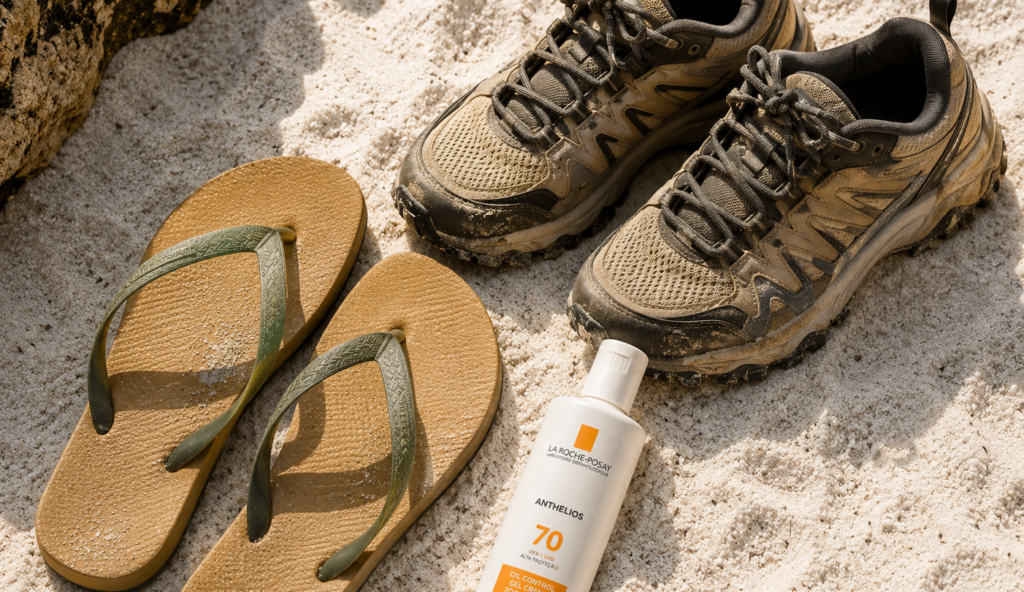
For simple walks and beach days, sandals and flip-flops work well. Choose a comfortable sandal you already know, one that won’t hurt your feet after a full day of use.
For running on the beach, sneakers are the best choice. Regular runners will feel much more comfortable with proper footwear. There are models specifically designed for sand and beach running, built for better performance on uneven surfaces, worth looking into before your trip.
For hikes through the hills, walks between Brasília and Encantadas, or outings on cold and wet days, trail shoes or trekking boots make a real difference. The terrain gets uneven and slippery, and footwear with good grip protects your ankles and keeps you steady on the climbs.
For outings that involve river crossings, risk of high tide, or walking in the water between rocks, water shoes are ideal. They are waterproof, firm on rocks, and comfortable to walk in after coming out of the water.
A practical tip: bring the sneakers and a pair of flip-flops. If the outing requires getting your feet wet, swap them, keep the dry pair in a small bag inside your backpack, and carry on.
Sunscreen: Dry Outings, Wet Outings, and What You Put on Your Skin
Sunscreen is not optional on Ilha do Mel. It is part of the basic kit for any day on the island, in any season.
The sun on the Paraná coast is intense, and on sand and in the water exposure is amplified. Dermatologists recommend daily use of sunscreen with at least SPF 30, reapplied every two hours and after each swim. For long beach days or boat trips, SPF 50 or higher is the better choice.
The right sunscreen can vary depending on the type of outing.
For dry outings, such as trails, walks, and historical visits, any good-quality sunscreen with adequate SPF works well. The key is regular reapplication, especially if you’re sweating.
For wet outings, such as swimming, snorkeling, and water sports, water-resistant sunscreen with specific labeling for that use is the better option. Reapplication after leaving the water is even more important.
One choice that makes a difference beyond your skin: organic and reef-safe sunscreens, formulated without substances that harm coral reefs and marine life. Ilha do Mel is an environmental preservation area, and what goes into the water with you matters. They are increasingly easy to find on e-commerce platforms and in natural product stores.
Another layer of protection that works in any season: UV-protective shirts and rash guards. Designed to block solar radiation, they are lightweight, dry quickly, and replace sunscreen on most of the body during hikes, trails, and beach days. Combined with a UV hat or cap, they provide complete protection that reduces the need for constant sunscreen reapplication. There’s a good range of models available on Mercado Livre and Amazon, and they are an investment that lasts many trips.
Items Sitting at Home That Make Perfect Sense Here
The island has a special gift: it gives new purpose to those items you bought with excitement, used once, and put away. Here they find their true calling.
The inflatable board leaning against the bedroom wall will get used. The snorkel that came back from a past trip and never left its packaging finds waters here that are asking exactly for it. The float, the waterproof fanny pack, the UV cap, the folding kayak. If you own it and don’t use it day-to-day, Ilha do Mel is probably the right place to finally break it in.
For surfers, the island has waves, and the wax, leash, and spare fins will thank you for not being left behind. Buying or renting on the island costs more than bringing from home.
Caps and hats also belong in this category: they sit in most people’s closets, make an enormous difference in the island sun, and are rarely remembered when packing.
What to Leave Behind
Formal wear, leather shoes, high heels. None of these will be used on the island, unless you know in advance about a very specific event that calls for them.
More important than what to wear is how much to carry. With no car, any extra item you bring will be on your shoulders or in the baggage transport service. Every piece in the bag has a real physical cost.
The cooler is an interesting case: it can be a good idea, since it lets you bring your own drinks and save money at the beach. But it has a cost: you’ll need to carry it, even with wheels or a strap, through the sand to wherever you want to be. Worth thinking about before boarding with it.
The rolling suitcase is another choice worth considering. It works perfectly until the moment you reach the sand. From there, the wheels sink and what was convenient becomes effort. If you can opt for a backpack, do it. If you come with a suitcase, the baggage transport service handles the sand stretch without any drama.
And if you can, leave that pile of everyday worries at home too, it only adds weight to the bag, and we know that even if it makes the trip to Ilha do Mel, it’ll end up forgotten at the bottom of the suitcase.
Packing Checklist by Season
Summer
Light clothing, shorts, swimwear, t-shirts, extra change of clothes, SPF 50+ sunscreen, after-sun lotion, light windbreaker, flip-flops, sneakers for running or hiking, beach towel, bath towel, personal hygiene items, regular medications and emergency supplies, insect repellent for end-of-day outings, cash, ID.
Winter
Long pants, wool sweaters or hoodies, waterproof jacket, socks, comfortable sneakers, flip-flops for indoor use, sunscreen, bath towel, personal hygiene items, medications, insect repellent, cash, ID.
Shoulder Season
A mix of both lists: light clothes for the day, one warm layer for the evening, windbreaker in the bag, sunscreen, both types of footwear.
The most important item in your entire bag takes up no space and weighs nothing: it’s the willingness to let yourself be carried by the rhythm of the island. And when it’s time to leave, don’t forget to save room in your bag for all the moments Ilha do Mel is going to place inside you.
Have any questions about what to bring? Write to us at contact@almavidamar.com. It’s a pleasure to help you arrive prepared.
If you enjoyed this content, share it and follow AlmaVidaMar on Facebook. Stories, tips and secrets from Ilha do Mel, for those who love this place and for those who are about to.
Also read: How to Get to Ilha do Mel: The Complete Guide from Curitiba and The Island That Gives You Back What You Forgot You Had.